


It’s a familiar story for many homeowners. You’re relaxing in your living room when you notice it—a faint, brownish stain on the ceiling, just a few feet from the fireplace. Your first instinct might be to dismiss it, thinking it’s an old mark or a minor issue you can deal with later. After all, it’s just a small drip. How much trouble could it be?
The unfortunate truth is that this seemingly insignificant stain is often the first visible symptom of a much larger problem, one that originates from your chimney and silently puts your entire home at risk. That small drip is a warning sign that the integrity of your roof is being compromised and your energy bills are likely creeping higher. Understanding how a damaged chimney affects your roof and energy bills is crucial for maintaining a safe, efficient home.
This article will reveal the hidden connection between the health of your chimney, the durability of your roof, and your home’s overall energy efficiency. We will explore how a small issue on the roofline can lead to a cascade of expensive problems and explain why proactive chimney repair is one of the most essential investments you can make in your property.
Your Chimney and Roof: A Critical Connection Point
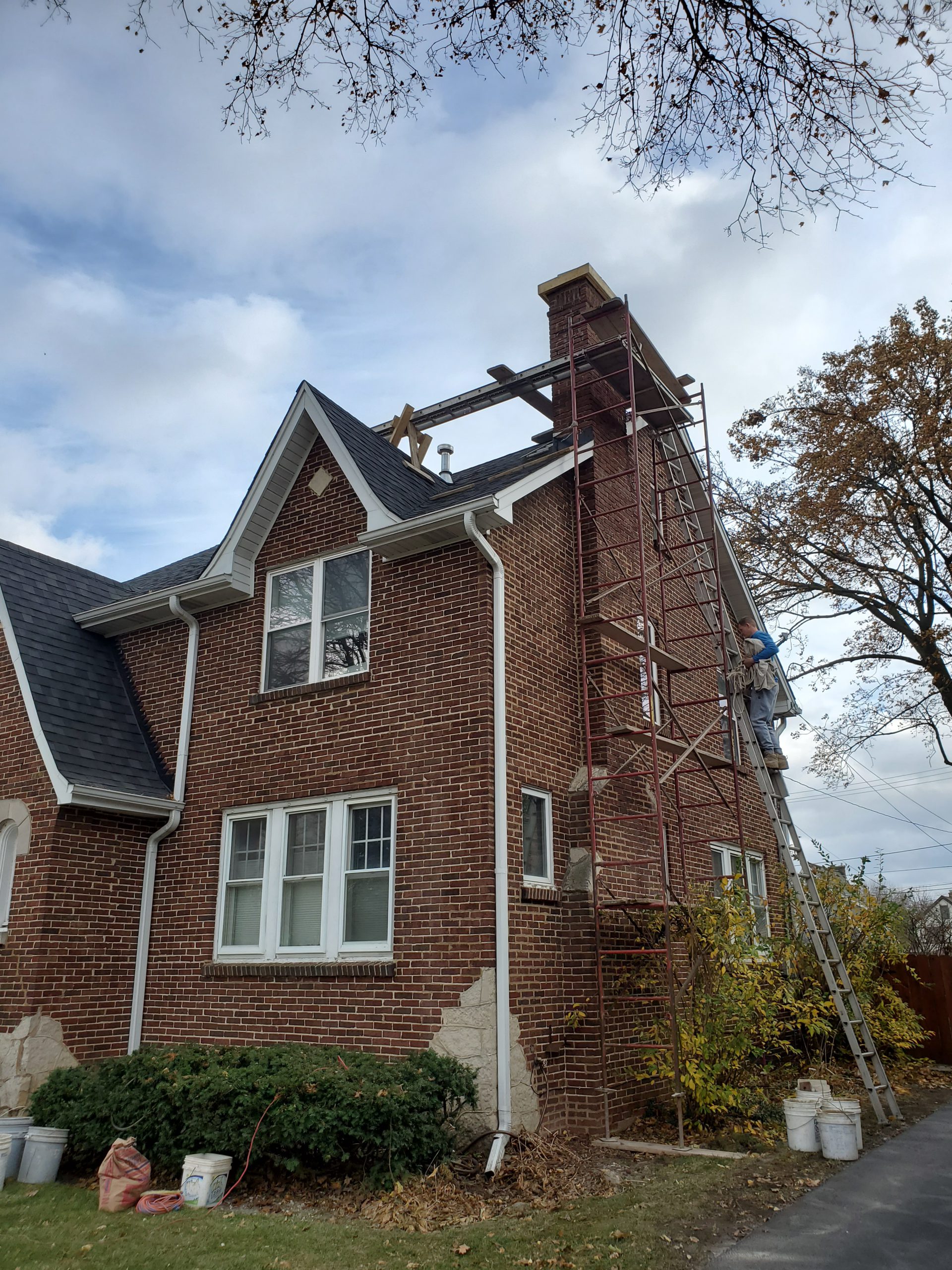
To understand why your chimney is so vulnerable, you have to see it from a structural perspective. The chimney is the single largest object that penetrates through the protective barrier of your roof. While your shingles are designed to create a seamless shield against the elements, the spot where they meet the vertical brick of the chimney is a natural point of weakness. To solve this, a critical component called “flashing” is installed.
In simple terms, chimney flashing is a series of metal pieces meticulously layered with the shingles and sealed against the chimney’s masonry to create a watertight barrier. Think of it like the seal around a car’s window; its entire purpose is to prevent water from getting through a necessary seam. This flashing is typically made from materials like aluminum, galvanized steel, or copper. While durable, these materials are constantly exposed to the harsh Chicago elements. Over time, the constant cycle of rain, snow, ice, and sun, combined with the natural expansion and contraction from temperature changes, can cause the flashing to warp, crack, or pull away from the masonry, leaving a gap for water to enter.
The Domino Effect: From Damaged Flashing to a Decaying Roof
Once the flashing is compromised, a destructive chain reaction begins, often long before you see any evidence inside your home.
The initial breach occurs when water finds its way through a cracked sealant or a rusted spot in the flashing. This water doesn’t just drip straight down into your living room. Instead, it seeps underneath the shingles and begins to saturate the underlying roof decking—the plywood or OSB sheets that form the foundational structure of your roof. Because this area is hidden from view, this saturation can go on for months, or even years, without being detected.
Once the wood sheathing is consistently damp, the onset of rot begins. Wood rot is a form of fungal decay that breaks down the fibers of the wood, causing it to become soft, spongy, and structurally useless. This process effectively weakens your roof from the inside out. What started as a small leak has now begun to compromise the very skeleton of your roof.
This is not where the damage ends. As the sheathing decays, the rot can easily spread to adjacent structural components like the roof rafters and joists. This can lead to sagging or soft spots on your roof, and in severe cases, threaten its overall structural integrity. The progression is relentless: First, water infiltrates the gap. Next, it saturates the hidden sheathing. Finally, decay sets in and begins to spread. By the time a visible stain appears on your ceiling, the damage behind the scenes is often extensive and far more expensive to repair than the initial flashing issue ever would have been.
The Hidden Cost: How Chimney Damage Inflates Your Energy Bills
A compromised chimney doesn’t just leak water; it leaks money by making your home less energy-efficient. This happens in two primary ways.
First, as water seeps into the attic space around the chimney, it soaks the surrounding insulation. Wet insulation is effectively useless. The trapped moisture compresses the material and eliminates the tiny air pockets that give insulation its heat-resisting power, or R-value. As a result, that section of your attic might as well have no insulation at all, creating a massive thermal bridge where heat can freely escape in the winter.
Second, the same cracks in the chimney’s masonry or gaps in the flashing that let water in also let air out. These drafts create a constant cycle of energy loss. During the frigid Chicago winters, the heated air you’re paying for escapes directly through these gaps, while in the summer, hot, humid air infiltrates your home. The bottom line is that your furnace and air conditioning unit are forced to work harder and run longer to maintain the temperature you’ve set on your thermostat. This constant, inefficient cycling leads directly to a noticeable and often significant increase in your monthly utility bills.
A Holistic Approach to Chimney & Roof Health
This is precisely why, when you suspect a chimney leak, it is crucial to call a specialized chimney company. A general roofer might simply replace the flashing, but they may not have the masonry expertise to identify or repair underlying problems with the chimney itself. At Delta Chimneys, we understand that the chimney and roof form an interconnected system that must work in perfect harmony.
Our process begins with a comprehensive inspection that doesn’t just stop at the visible bricks or a single leak point. We meticulously examine every component of your chimney system—the flashing, the chimney crown, the mortar joints, the brickwork, and the surrounding roof area—to identify the true source of the problem and assess the full extent of any damage. With years of experience serving the Chicago area, our certified technicians have an intimate understanding of the specific challenges our local weather poses to chimney structures, and we have the expertise to provide lasting solutions, not just temporary fixes.
Conclusion
A small water stain on your ceiling is not just a cosmetic issue; it’s a critical warning sign of potential roof decay and significant energy loss. The health of your chimney is directly linked to the health of your roof and the efficiency of your home. Recognizing this connection is the first step toward protecting your property. Now that you know the signs and understand the stakes, you can take proactive steps to ensure your home remains safe, secure, and valuable for years to come.
Don’t wait for a drip to become a disaster. If you’ve noticed a leak, are concerned about the state of your chimney, or simply want the peace of mind that comes from knowing your home is protected, contact Delta Chimneys now! We invite you to schedule a comprehensive, no-obligation inspection with one of our certified professionals. Let us help you protect your biggest investment.